Winter Double Stars to Observe from Suburban Northern Hemisphere Skies
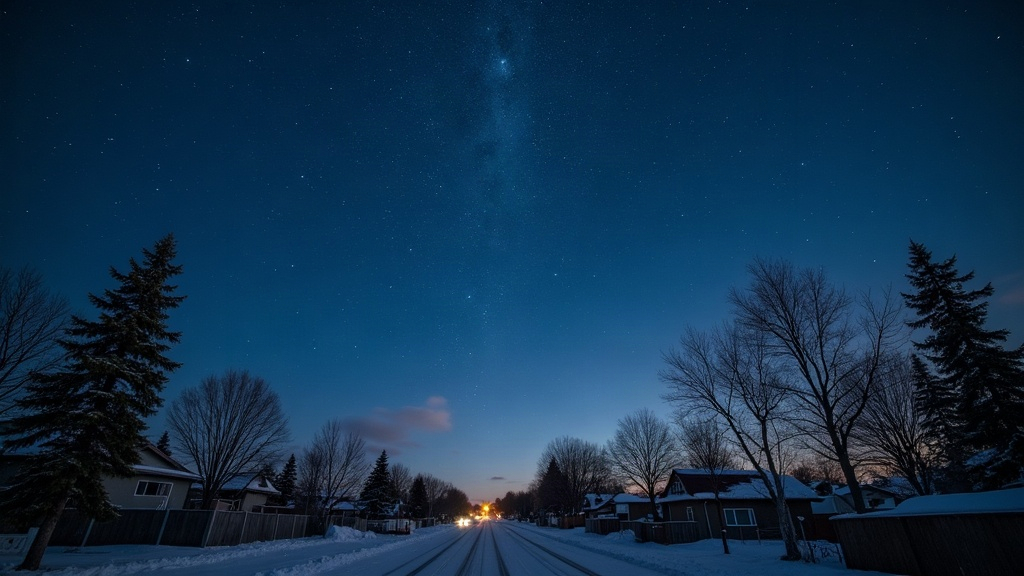
Winter nights bring some of the clearest, steadiest skies all year, and even if you’re stuck observing from a light-polluted suburb, double stars are still among the most rewarding targets you can aim a telescope at. Faint galaxies and nebulae wash out under streetlights almost immediately, but double stars don’t play by those rules. They’re bright, high-contrast, and often surprisingly colorful, which makes them perfect for anyone working with a modest telescope and a bit of patience.
Why Double Stars Are Ideal for Suburban Skies
Light pollution is the enemy of deep-sky observing. It drowns out faint extended objects like galaxies and nebulae before you even get a chance to see them. Double stars are different. They’re point sources of light, so they stay crisp and bright no matter how much sky glow you’re dealing with. Here’s what you actually need:
- A telescope with at least 60-80mm of aperture
- Moderate to high magnification, somewhere around 100x-200x
- Steady atmospheric “seeing” (winter often delivers this right after sunset, before the ground finishes releasing its stored heat)
A lot of the famous doubles happen to sit in bright, easy-to-find constellations like Orion and Gemini, so honestly, winter might be the best season of the year to get into this hobby.
Top Winter Double Stars to Find
1. Rigel (Beta Orionis)
Rigel is a blue-white supergiant with a faint, 7th-magnitude companion tucked close beside it. The brightness gap between the two is extreme, which is exactly why this pair is treated as a classic test of both your optics and your patience. You’ll want at least 100x magnification and genuinely steady air to split it cleanly. Rush it on a night with turbulent seeing and you’ll just see a blurry smear.
2. Castor (Alpha Geminorum)
This one’s a showpiece. Castor splits into two nearly matched white stars with even a small telescope, at 100x-150x. Technically it’s a six-star system, but don’t get your hopes up for all six. Amateur scopes will only resolve the two brightest components. Still, that pair alone is gorgeous enough to justify the trip outside.
3. Sigma Orionis
Sit near Orion’s Belt and you’ll find Sigma Orionis, a multiple-star system that shows 3-4 components even in a small telescope. The colors run from blue-white to pale yellow, and the overall effect is like a miniature jewel box scattered across the eyepiece.
4. Iota Cassiopeiae
Less famous, but worth the detour. This triple star system sits higher in the northern sky, which keeps it well clear of the horizon haze that plagues a lot of suburban observing. Depending on your optics and eyepiece, expect pale yellow, blue, and even purple tints.
5. Almach (Gamma Andromedae)
Arguably the most colorful double visible all winter. A golden-orange primary sits next to a blue-green secondary, and the contrast between the two is often described as one of the prettiest sights in all of amateur astronomy. If you only try one double star this season, make it this one.
Tips for Observing from a Suburban Backyard
- Let your eyes and scope adjust. Give your telescope 20-30 minutes to settle at ambient temperature, and give your eyes 10-15 minutes to dark-adapt. Even partial adaptation makes a real difference in how you perceive color.
- Pick a Moon-free window when you can, though honestly, double stars are bright enough that a full Moon won’t ruin the view.
- Push the magnification up slowly. A lot of doubles won’t split cleanly until you’re above 100x. If your eyepiece collection is thin, a 2x Barlow lens solves that problem cheaply.
- Block stray light wherever possible. A basic dew shield, or just standing in the shadow cast by a fence or garage, can noticeably improve contrast against that orange sodium-vapor glow suburbs are famous for.
- Keep a log. Jot down separation, color, brightness differences, whatever you notice. It sounds tedious, but it’s how you start recognizing patterns and tracking your own progress night to night.
What to Expect at Different Aperture Sizes
- 60-80mm refractor: Castor, Rigel, and Almach are all well within reach, no stretch required.
- 100-150mm reflector or SCT: Sigma Orionis resolves more cleanly at this size, and subtle color differences start to stand out.
- 200mm+ Dobsonian: Tighter pairs open up, and even faint companions pop with noticeably more contrast, even from a suburban backyard.
Conclusion
Steady winter air combined with bright, high-altitude stars makes this the ideal season for suburban observers to dig into double and multiple star systems. Whether it’s the dazzling gold-blue pairing of Almach or the classic challenge of splitting Rigel, these targets make one thing clear: you don’t need a dark-sky site to experience real astronomy. Clear skies, a modest telescope, and a bit of curiosity pointed upward are enough.