How to Find Uranus with 10x50 Binoculars This Autumn
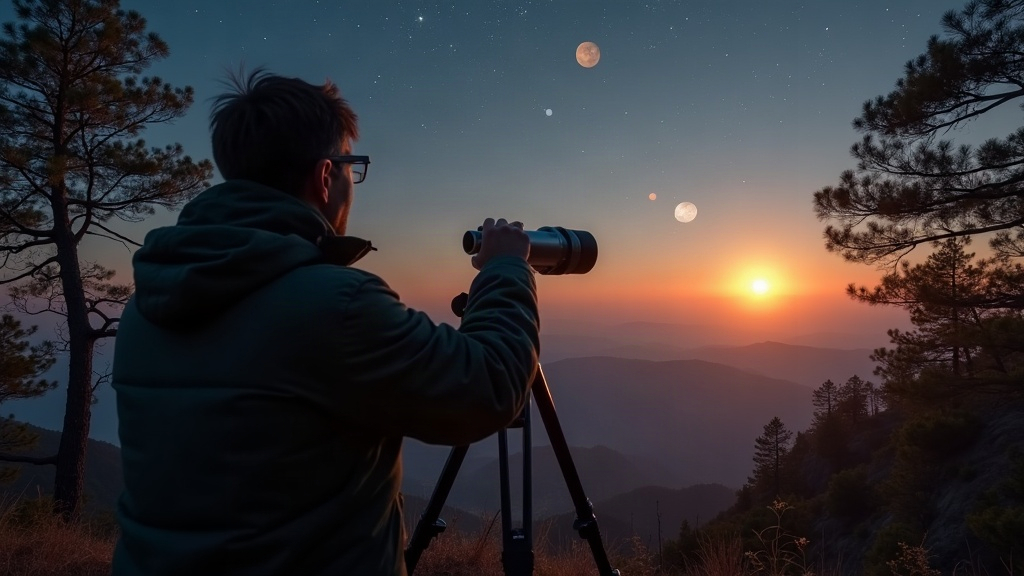
Uranus is one of those rare planets you can actually hunt down with nothing fancier than a pair of 10x50 binoculars. And autumn happens to be the sweet spot for it. The planet reaches opposition in November, which means it’s visible all night long, shining at its brightest, and sitting in a comfortable position for observers at mid-northern and southern latitudes.
Why Autumn Is the Best Time for Uranus
Uranus takes 84 years to circle the Sun once, so it crawls across the background stars at a glacial pace. Right now it’s parked in Aries, and it’ll stay there for several more years yet. During autumn, Aries climbs high in the eastern sky not long after sunset and crosses the meridian around midnight local time. That’s when Uranus sits at its highest, clearest point, giving you several solid hours each night to track it down. Around opposition, usually mid-to-late November, the planet makes its closest pass to Earth and brightens to magnitude 5.6-5.7. That’s technically within naked-eye range if you’ve got genuinely dark skies, but honestly, binoculars make the whole thing far less of a gamble.
What You’ll Need
- 10x50 binoculars. Those 50mm objective lenses pull in enough light to snag a magnitude 5.7 object even from a moderately light-polluted suburb.
- A star chart or astronomy app. Stellarium, SkySafari, or even a printed finder chart will do, as long as it shows Aries and its neighboring bright stars.
- A tripod or some kind of steady support. At 10x magnification, hand tremor becomes obvious fast. Bracing your elbows against a wall, a chair back, or the roof of your car makes a real difference.
- A red flashlight to check your charts without wrecking your night vision.
- Patience. Through binoculars, Uranus looks like a faint, slightly blue-green “star,” not some glowing disk out of a textbook illustration.
Step-by-Step: Locating Uranus
1. Find the Right Time Window
Give it at least two hours after sunset so the sky goes properly dark and Aries clears the horizon haze. Late October through December gives you the widest, most comfortable viewing window, with the constellation visible from dusk all the way to the early morning hours.
2. Locate Aries First
Aries is small and faint, sitting east of the Great Square of Pegasus. Look for its three main stars, Hamal, Sheratan, and Mesarthim, forming a gentle curved line. Hamal is the brightest of the three and makes a good anchor point.
3. Star-Hop to Uranus’s Position
Since Uranus drifts a little each year, don’t rely on memory. Check its current coordinates with an up-to-date app before you head outside. Once you’ve got the right ascension and declination, or a nearby reference star pulled from the app, do this:
- Center that reference star in your binoculars.
- Scan slowly, in small steps, toward Uranus’s marked position.
- Watch for a “star” that looks slightly duller and more evenly colored (a pale blue-green) compared to the crisp white twinkle of actual stars.
4. Confirm You’ve Found It
Uranus won’t twinkle the way real stars do, since it has a tiny, technically resolvable disk rather than a pure point of light. The most reliable way to confirm it is the sketch-and-compare technique: draw the field of faint “stars” you’re seeing, then come back two or three nights later. Whichever point of light has shifted against the fixed background, that’s Uranus.
Common Mistakes to Avoid
- Going out too early in the evening, before Aries has fully cleared the murky air near the horizon.
- Skipping the sketch-and-compare step. It’s really the only dependable way to tell Uranus apart from a similarly faint field star.
- Using binoculars under 40mm aperture. Smaller lenses often just can’t grab a magnitude 5.7 object from suburban skies, no matter how good your eyes are.
- Ignoring the moon’s phase. Aim for a few days before or after new moon, when contrast is at its best.
Tips for Better Results
- If you can manage it, drive out past the worst of the city lights. Even a short trip to darker skies improves contrast dramatically.
- Give your eyes 15 to 20 minutes to adjust to the dark before you start searching.
- Try averted vision, looking slightly off to the side of your target rather than straight at it. It’s an old astronomer’s trick, and it genuinely helps pick up faint points of light.
Conclusion
Spotting Uranus with a pair of 10x50 binoculars isn’t about owning pricey equipment. It comes down to timing, patience, and a chart you can trust. Autumn’s opposition window puts the planet brighter and higher in the sky than at any other stretch of the year, giving binocular observers their best shot at finally checking this distant ice giant off the list. So grab your binoculars, find Aries, and let the stars, and a bit of patience, lead you straight to Uranus.