Star Tracker vs Lightweight Equatorial Mount for a 300mm Lens
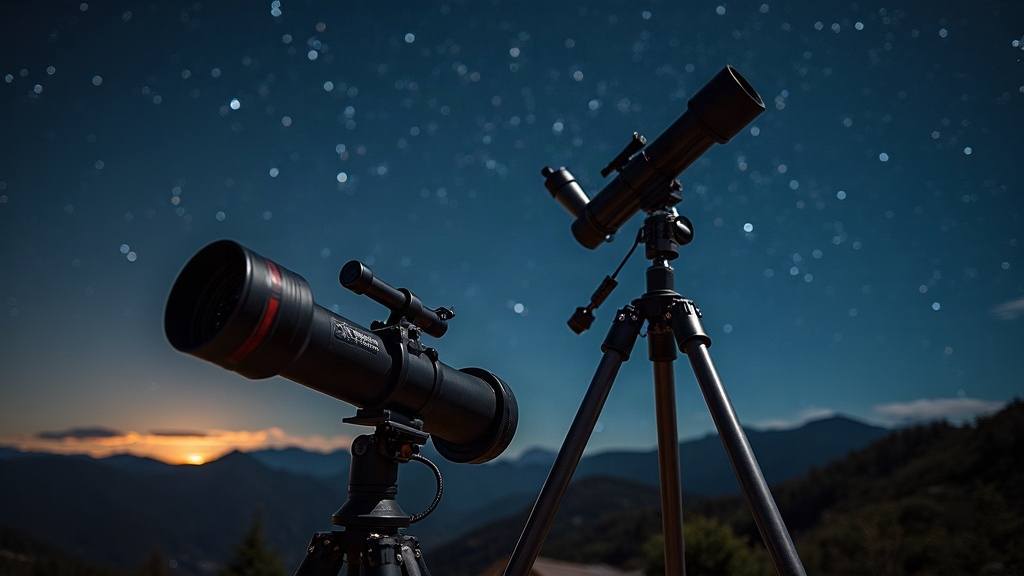
A dedicated star tracker can carry a 300mm lens. Whether it does so better than a lightweight equatorial (EQ) mount, though, really comes down to what you mean by “better.” If portability and price are what matter to you, the tracker wins hands down. If tracking precision, guiding support, and long-term stability are your priorities, the EQ mount pulls ahead. For most people shooting at 300mm, a well-balanced tracker gets the job done. A lightweight EQ mount only becomes the smarter pick once you start adding guiding, heavier gear, or longer glass.
Why 300mm Is the Tipping Point
300mm sits right at the edge of what most star trackers are designed for. It’s long enough that tracking errors, sloppy polar alignment, or a bit of vibration will show up as star trailing on your images. But it’s still short enough that a tracker’s rated payload (usually somewhere between 3 and 11 lbs, depending on the model) can technically handle a camera and lens combo.
That’s exactly why 300mm has become the go-to “stress test” focal length whenever people compare gear.
Star Tracker Strengths at 300mm
- Weight and portability: Most trackers (Sky-Watcher Star Adventurer, iOptron SkyGuider Pro, Move Shoot Move) weigh under 3 lbs without the mount head. The whole kit fits in a backpack, no exaggeration.
- Lower cost: Entry-level trackers run $200-$400. Compare that to $600-$1,200+ for a decent lightweight EQ mount like the Sky-Watcher EQM-35 or the iOptron CEM26.
- Fast setup: Polar alignment through a built-in scope or a phone app takes a few minutes. Great if you’re traveling or only have one clear night.
- Good enough tracking: With careful polar alignment, most trackers keep stars round at 300mm for 30-60 second exposures. That’s plenty for Milky Way wide-field shots stretched into telephoto nightscapes.
Where Trackers Struggle
- Payload balance issues: At 300mm, the lens length works against you. Even if total weight stays under the rated limit, the off-axis torque can cause sagging or periodic error that’s tough to fix without autoguiding.
- No autoguiding on entry models: Base Star Adventurer units don’t have autoguider ports. So your tracking accuracy depends entirely on polar alignment and periodic error, and both get worse the longer your exposure runs at 300mm.
- Vibration sensitivity: A lightweight tripod paired with a tracker flexes more under a long lens, especially the moment any wind picks up.
Lightweight Equatorial Mount Strengths
- Autoguiding support: Nearly every EQ mount (EQM-35, HEQ5, CEM26) has an ST-4 or USB guide port, letting you correct tracking errors in real time through a guide camera. This is, by far, the biggest accuracy advantage once you’re past 300mm.
- Higher payload capacity with margin: A mount rated for 15-18 lbs carrying a 5-6 lb camera/lens combo still has plenty of headroom. That margin matters more for stability than for raw lifting power.
- Better periodic error correction (PEC): Geared worm drives in EQ mounts usually produce smoother, more correctable tracking curves than the motors in a tracker.
- Meridian flip and GoTo features: Handy if you’re running multi-target sessions or shooting for several hours at a stretch.
Trade-offs
- Weight: Even the “lightweight” EQ mounts (10-15 lbs with counterweights) end up 3-5 times heavier than a tracker setup.
- Setup time: Precise polar alignment, balancing with counterweights, and sorting out cables takes 15-30 minutes. A tracker takes about 5.
- Cost: Budget for the mount, a tripod, and ideally a guide scope or camera if you actually want to use that autoguiding advantage.
Real-World Guidance
- Occasional 300mm shots, travel-focused: A star tracker with careful balancing and short sub-exposures (20-40 seconds) will give you clean results without lugging extra gear around.
- Dedicated 300mm+ deep-sky or nightscape work: A lightweight EQ mount with guiding will consistently beat a tracker here, especially once exposures run past a minute or you’re stacking dozens of frames.
- Budget-conscious beginners: Start with a tracker and a 135-200mm lens to learn polar alignment properly, then move up to an EQ mount as your focal length and exposure times grow.
Practical Tips for Pushing a Tracker to 300mm
- Use an L-bracket and ball head to keep the lens balanced close to the mount’s rotational axis.
- Keep exposures under 30-45 seconds so periodic error doesn’t show up as visible trailing.
- Shoot on calm nights and use a sturdy carbon-fiber tripod, not the flimsy aluminum kind.
- Shoot more frames and stack them in software (DeepSkyStacker, Sequator) to smooth over minor tracking imperfections.
Conclusion
A star tracker isn’t fundamentally “better” than a lightweight equatorial mount for carrying a 300mm lens. It’s just built for a different job. Trackers win on weight, price, and how fast you can set up. EQ mounts win on tracking precision, guiding, and payload stability. If your 300mm sessions are occasional and your exposures stay short, a tracker will treat you just fine. But if you’re regularly pushing longer exposures or heavier gear, putting money into a lightweight EQ mount with autoguiding will get you noticeably sharper, more reliable results.