Binocular Astronomy vs a 70mm Refractor for Moon Viewing
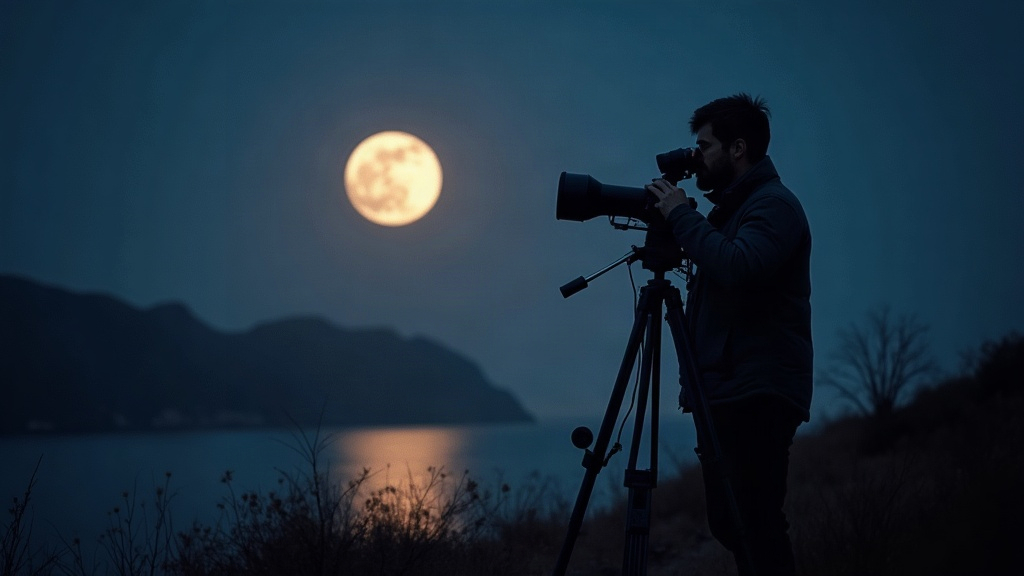
If you’re planning your first night under the stars, the Moon is the obvious target. It’s bright, it’s easy to find, and it rewards even the laziest five-minute look with real detail. The real question is whether a pair of binoculars or an entry-level 70mm refractor telescope will give you the better experience. Short answer: binoculars win on convenience and cost, a 70mm refractor wins on detail and magnification. But each comes with trade-offs worth knowing before you spend money.
Why the Moon Is the Perfect Beginner Target
Unlike faint deep-sky targets, the Moon doesn’t care about light pollution. No dark sky required, no special filters, no drive out to some mountain horizon at 2am. You can see it from a downtown balcony just as well as a rural backyard. That’s exactly what makes it the ideal testing ground for comparing gear: you get to judge image quality, ease of use, and resolved detail all in the same evening, often within the same hour.
Binoculars: The Low-Friction Option
A standard pair of 10x50 or 7x50 binoculars is usually the first instrument any astronomer owns, and honestly, there’s a good reason for that.
Pros:
- No setup time. Grab them off the hook by the door, step outside, and you’re looking at craters in under 10 seconds.
- Wide field of view. The whole lunar disc fits in one view, along with the surrounding stars, which makes orientation much easier for beginners.
- Dual-eye viewing is simply more comfortable. No squinting with one eye shut, no eye strain after twenty minutes.
- Portability. They slide into a backpack, survive road trips, and pull double duty for birding or daytime hikes.
Cons:
- Magnification tops out around 7x–10x, so craters, mountain ridges, and the shadow detail along the terminator stay fairly soft and subtle.
- Hold them steady above 10x and your arms start to shake within a minute or two. A tripod adapter fixes this, but then you’ve lost some of that grab-and-go simplicity.
With binoculars you’ll clearly make out the major maria (the dark “seas”), the rough outline of big craters like Tycho and Copernicus, and that jagged terminator line separating day from night. It’s an immediate, satisfying view. Just don’t expect crater walls or individual rilles to jump out at you.
The 70mm Refractor: Stepping Up in Detail
A 70mm (2.8-inch) refractor is widely considered the sweet spot for a first telescope. Mount it on a basic altazimuth stand and lunar observing changes completely.
Pros:
- Real magnification, usually 35x up to 100x or more depending on which eyepiece you swap in, pulls out individual crater walls, rilles, and the bright ray systems radiating from impacts like Tycho.
- Sharper contrast along the terminator. Shadows stretch out and exaggerate mountain ranges and crater rims in a way binoculars simply can’t show.
- Room to grow. Add a second eyepiece, a Barlow lens, or a basic Moon filter to kill glare, and the same scope keeps getting more capable as your interest deepens.
- Goes beyond the Moon. The same 70mm aperture will resolve Saturn’s rings as a distinct shape, show Jupiter’s four Galilean moons as tiny points, and pull in some of the brighter deep-sky targets too.
Cons:
- Setup takes a few minutes, not seconds: mounting the tube, balancing it, aligning the finder scope so it actually points where the main optics point.
- Field of view is narrower, so at higher power you’re often looking at one region of the Moon rather than the whole disc at once.
- More parts means more to carry, and more things that can work loose or get misaligned in a bag.
- Budget models sometimes show a faint color fringe (chromatic aberration) along the Moon’s bright edge. Not a dealbreaker, just something to expect at this price point.
Head-to-Head: What Matters Most
| Factor | Binoculars | 70mm Refractor |
|---|---|---|
| Setup time | Instant | 2–5 minutes |
| Cost | $30–$150 | $80–$250 |
| Detail level | Moderate | High |
| Portability | Excellent | Good |
| Versatility | Daytime + sky | Mostly night sky |
| Learning curve | None | Light |
Which Should You Choose?
- Choose binoculars if you want something grab-and-go, you’ll likely observe a few casual nights a month, or you want one piece of gear that also covers hiking, birding, or a concert.
- Choose a 70mm refractor if you already know you’re hooked, you want actual crater shadows and surface texture, and a short setup routine each session doesn’t bother you.
- Best of both worlds: plenty of people end up owning both. Binoculars for a quick five-minute look on a weeknight, the refractor for a proper Saturday-night session.
Quick Tips for Either Option
- Observe near the first or last quarter Moon, not the full Moon. A full Moon is flat and washed out; the terminator shadows at quarter phase show far more texture.
- A cheap Moon filter on a telescope, or just waiting a bit after moonrise, cuts down the glare considerably.
- Rest binoculars on a fence post, a car roof, or a tripod adapter. The difference in sharpness is immediate and obvious.
Conclusion
Both binoculars and a 70mm refractor are solid, affordable ways into Moon-watching. Binoculars give you instant, wide-field views that suit a casual stargazer perfectly. A 70mm refractor gives you the crater-level detail that turns a quick glance into an actual observing session. Still not sure which to pick? Start with binoculars if you’ve already got a pair sitting in a closet somewhere, and if the Moon ends up hooking you the way it hooks most people, the 70mm refractor is the natural next step.