Why Brown Dwarfs Blur the Line Between Star and Planet
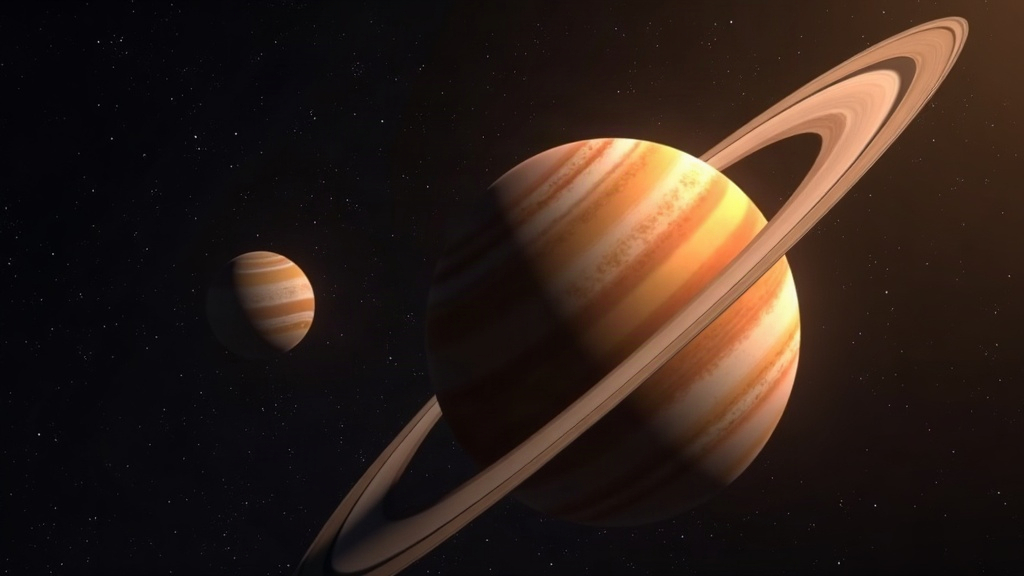
Think of brown dwarfs as the ultimate cosmic fence-sitters. They pack too much bulk to pass as standard planets, but they lack the sheer gravitational crush needed to kickstart the roaring nuclear fusion that lights up true stars. This weird identity crisis makes them a massive headache for astronomers trying to build neat classification boxes. Yet, cracking the mystery of these oddballs actually tells us exactly how stellar bodies and planetary neighbors pull themselves together in the deep dark of space.
What Exactly Is a Brown Dwarf?
A brown dwarf starts its life exactly like a star. Picture a sprawling, freezing cloud of cosmic gas and dust collapsing under its own gravity. But then, the process stalls. The object simply never gathers enough material to ignite a stable hydrogen furnace in its core. A star like our Sun smashes hydrogen atoms into helium, pumping out brutal, brilliant energy for billions of years. A brown dwarf just does not have the heft for that. Tipping the scales at roughly 13 to 80 times the mass of Jupiter, the internal pressure falls flat.
Instead of a steady, roaring fire, you get a quick spark. Many of these objects manage a brief, sputtering fusion of deuterium (a heavier form of hydrogen) or perhaps lithium right out of the gate. They glow faintly for a fleeting cosmic moment before spending the rest of eternity slowly cooling and fading into the black. That quiet fizzle is exactly why people stubbornly call them “failed stars.”
The Blurry Boundary With Planets
That bottom threshold of about 13 Jupiter masses is where the rulebook gets thrown out the window. Astronomers use this number because it marks the bare minimum required to burn deuterium. But the universe did not sign a contract agreeing to that strict cutoff. We regularly find objects lighter than 13 Jupiters that act suspiciously like brown dwarfs, alongside bloated, massive exoplanets that cross that same weight limit.
When you put a heavy planet and a light brown dwarf side by side, they start looking like twins. Here is where the lines blur:
- Formation method: A brown dwarf might condense directly from a collapsing gas cloud just like a star. But sometimes, they clump together inside a dusty protoplanetary disk, right alongside regular planets.
- Mass overlap: You can weigh a massive gas giant exoplanet and a small brown dwarf, and the scale might read exactly the same. Mass alone is a terrible way to tell them apart.
- Atmospheres: If you dropped a probe into both, you would find wildly similar chemistry. We are talking thick, swirling clouds, violent storms, and distinct bands of methane gas.
- Temperature: The coldest class of brown dwarfs, known as Y-dwarfs, have surface temperatures matching those of an average hot exoplanet. Some even drop below 300°C. That is literally chilly enough to support clouds of liquid water.
Why Classification Matters
Why get so hung up on labels? Because pinning down these definitions completely changes how we map the birth of solar systems. We have always treated making a star and making a planet as two totally different recipes. If a brown dwarf is baked using the star recipe (a top-down gas cloud collapse) but pops out looking exactly like a Jupiter-sized planet, do we call it a failed star? Or is it a wildly successful, overgrown planet?
The plot thickened recently when we started spotting free-floating brown dwarfs. These are lonely wanderers packing planetary mass but completely untethered from any host star. The James Webb Space Telescope recently peered into the dusty chaos of the Orion Nebula and caught dozens of these drifters red-handed. Some are so lightweight they directly rival standard giant planets. It forces us to ask a very uncomfortable question. Are “rogue planets” and “brown dwarfs” just two different nametags slapped onto the exact same thing?
Real Examples That Complicate the Picture
A quick look at the actual sky proves just how messy this gets.
- Gliese 229B: Found back in 1995, this was our very first confirmed brown dwarf. It orbits a small red dwarf star and packs the heft of somewhere between 20 and 50 Jupiters into its frame.
- WISE 0855-0714: This one throws out all expectations of a fiery stellar object. It is one of the coldest brown dwarfs we have ever found. With a surface temperature hovering around -13°F (-25°C), you would need a heavy winter parka to survive a visit. It feels more like an Arctic winter on Earth than a star.
- Luhman 16: Sitting just 6.5 light-years from our front door, this binary system features two brown dwarfs dancing around each other. Observations show them churning with violent, planet-like weather systems and fast-moving bands of dark clouds.
None of these sit comfortably in a tidy “star” or “planet” box. And really, that is the whole point. The cosmos never agreed to follow our filing system.
How Scientists Are Refining the Definition
Since weight alone tells us almost nothing useful, the astronomy community has started looking at the complete picture. Modern classification now relies on a strict checklist of different traits.
- Formation history: Did it collapse out of a free-floating cloud, or did it snowball together inside a dusty planetary disk?
- Fusion capability: Can it actually burn heavy fuel like deuterium or lithium, even for just a few million years?
- Orbital context: Is it a lone wolf drifting through the void, or is it chained to the gravity of a larger parent star?
- Spectral characteristics: What does its light signature look like? Astronomers sort them into specific L, T, and Y classes based on the bizarre chemicals floating in their atmospheres.
Increasingly, researchers are throwing their hands up and demanding we treat brown dwarfs as an entirely separate third category. Stop trying to shove a square peg into a round stellar hole.
Conclusion
Brown dwarfs prove pretty definitively that the universe hates our neat little definitions. Sitting stubbornly in a vast gray zone, they force researchers to scrap old textbooks and completely rethink how mass boundaries work. As next-generation telescopes come online, they are going to spot objects that are even colder, smaller, and weirder. The boundary separating a star from a planet is only going to get blurrier. Fortunately, that total lack of clarity is exactly what makes hunting for brown dwarfs one of the most exciting games in modern astronomy.