Best Eyepiece Focal Lengths for Globular Clusters in a 6-Inch Dob
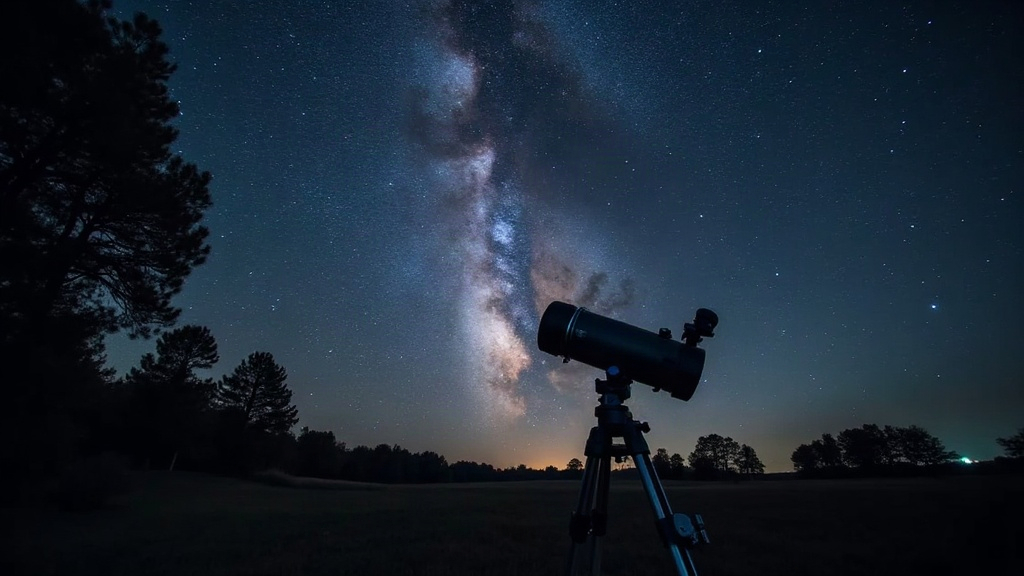
If you own a 6-inch Dobsonian, globular clusters are some of the most satisfying things you can point it at. But here’s the catch: picking the right eyepiece focal length is what separates a fuzzy blob from a sparkling ball of resolved stars. As a rule of thumb, you’ll want a spread of eyepieces from around 15mm down to 6mm to cover finding, framing, and resolving these dense star clusters. The sweet spot for most globulars sits somewhere between 100x and 180x magnification.
Why Focal Length Matters So Much for Globulars
Globular clusters like M13, M3, and M5 are compact, bright, and absolutely packed with stars, often hundreds of thousands of them crammed into a space smaller than the full moon. Unlike galaxies or nebulae, which usually look better at low power with a wide field to soak up faint extended light, globulars actually want you to crank up the magnification. That’s what starts peeling individual stars away from the cluster’s glowing core.
A 6-inch (150mm) Dobsonian typically runs a focal length around 1200mm (f/8) or 750mm (f/5), depending on the model you’ve got. That focal length is the thing that dictates what magnification you actually get from any eyepiece, using a simple formula:
Magnification = Telescope Focal Length ÷ Eyepiece Focal Length
So a 10mm eyepiece in a 1200mm f/8 Dob gets you 120x. Drop that same eyepiece into a 750mm f/5 Dob and you’re only looking at 75x. Big difference. This is exactly why matching your eyepiece choices to your specific scope’s focal length beats following some generic “use a 10mm eyepiece” recommendation you found online.
Recommended Eyepiece Focal Lengths by Purpose
Finding and Framing: 24mm–15mm
Start wide. Locate the cluster, get it centered in the field, and don’t rush this step. A 24mm eyepiece (roughly 50x–65x depending on your scope) shows a globular as a round, softly glowing ball with a brighter center, perfect for star-hopping and confirming you’re actually on the right target before switching lenses.
Initial Resolution: 15mm–10mm
This is where things get interesting. At 80x–150x, bright clusters like M13 (the Hercules Cluster) and M22 start showing that grainy, “sugar-sprinkled” texture around their edges as individual stars begin popping into view. It’s subtle at first, almost like your eyes are playing tricks on you, until suddenly it clicks and you realize you’re seeing actual stars, not just a smudge.
Deep Resolution: 9mm–6mm
Want to fully resolve a cluster’s core, where you’re counting individual stars instead of staring at a smooth glow? Push toward 150x–200x. A 7mm or 6mm eyepiece in a 1200mm Dob gets you roughly 170x–200x, and that’s often the magic number where M13 stops looking like a cotton ball and turns into a glittering sphere of pinpoint stars. The first time you hit that transition, it’s genuinely a “wow” moment at the eyepiece.
Practical Eyepiece Set for a 6-Inch Dob
For globular cluster hunting, you really only need a compact, well-chosen kit:
- 24mm (wide field, ~68° AFOV) — locating and framing
- 15mm or 13mm — comfortable mid-power viewing
- 10mm — strong resolution on bright clusters
- 7mm or 6mm — maximum detail on nights with steady seeing
No need for exotic, expensive ultra-wide eyepieces here. A plain 60°–68° apparent field of view (AFOV) plössl or basic wide-field design does the job just fine, since globulars are small, round targets and don’t demand an expansive field of view like a sprawling nebula might.
Seeing Conditions Limit How High You Can Go
Here’s the thing most beginners don’t expect: atmospheric seeing, not your eyepiece collection, is usually what actually caps your view. A 6-inch Dob can theoretically push 300x on a night of excellent seeing, but realistically, most nights will only support clean, sharp images up to about 200x–220x before the view starts to shimmer and go soft on you. Always start at lower power and work your way up. If the image degrades at a given magnification, don’t force it, just back off one eyepiece step.
Quick Tips for Better Globular Cluster Views
- Observe when the cluster sits high in the sky (above 40° altitude) to cut down on atmospheric distortion.
- Give your eyes at least 20 minutes to dark-adapt before pushing to high magnification. Skipping this step is the most common mistake.
- Try averted vision at higher powers. Look slightly off to the side rather than straight at the cluster; it often reveals faint outer stars that direct vision completely misses.
- Collimation matters a lot more at high power, so check it before any serious globular cluster session. A slightly off-collimated scope might look fine at 65x but fall apart at 180x.
Conclusion
For a 6-inch Dobsonian, the best eyepiece focal lengths for globular clusters run roughly from 24mm down to 6mm, taking you from wide framing all the way to deep stellar resolution. The real magic lives between 100x and 200x, where clusters like M13, M3, and M5 transform from soft glowing balls into resolved swarms of individual stars right before your eyes. Build a small, versatile eyepiece set, match your focal lengths to your scope’s actual focal length rather than someone else’s setup, and let the night’s seeing conditions decide how far you push the magnification.